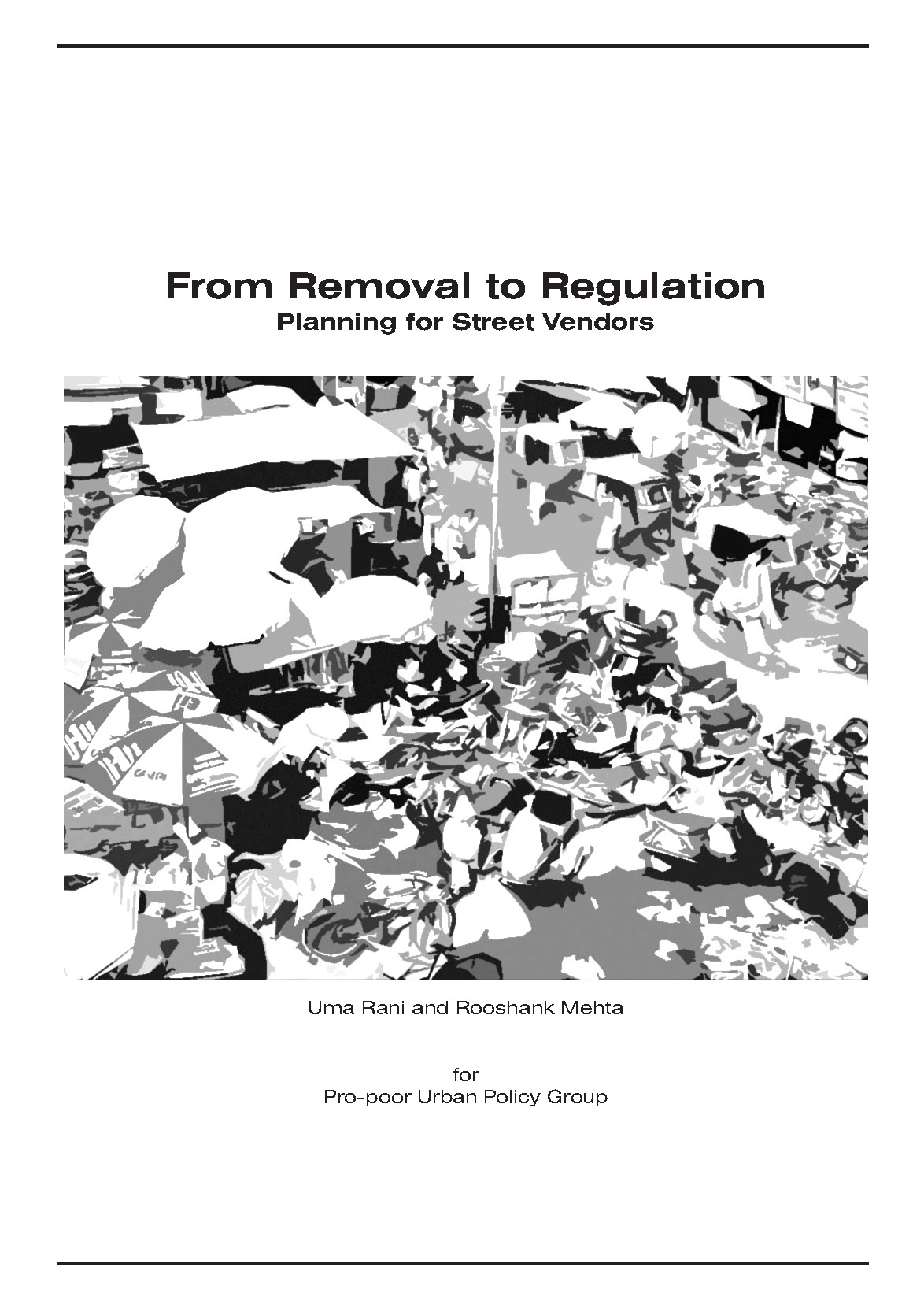
The main objective of the study was to demonstrate that the integration of the informal sector and unplanned areas is possible through appropriate planning efforts. As the removal or resettlement of street vendors reduces their earning capacities, the study illustrates how street vendors can be integrated into urban planning initiatives by adopting an inclusive and pro-poor urban policy. Two areas in Ahmedabad city — Manek Chowk and Teen Darwaja — were considered to show how these economic activities can be integrated within the existing urban setup if they are regularised and appropriate spaces are allocated to the different stakeholders. These two areas accommodate intense economic activities, including a sizeable number of formal and informal sellers. Through area and economic analysis, the study shows that formal and informal activities need to co-exist and support each other, and that regularisation and regulation of informal activities is essential for sustaining the livelihoods of the poor.
The paper, co-authored by Rushank Mehta and Dr. Uma Rani, can be downloaded here.